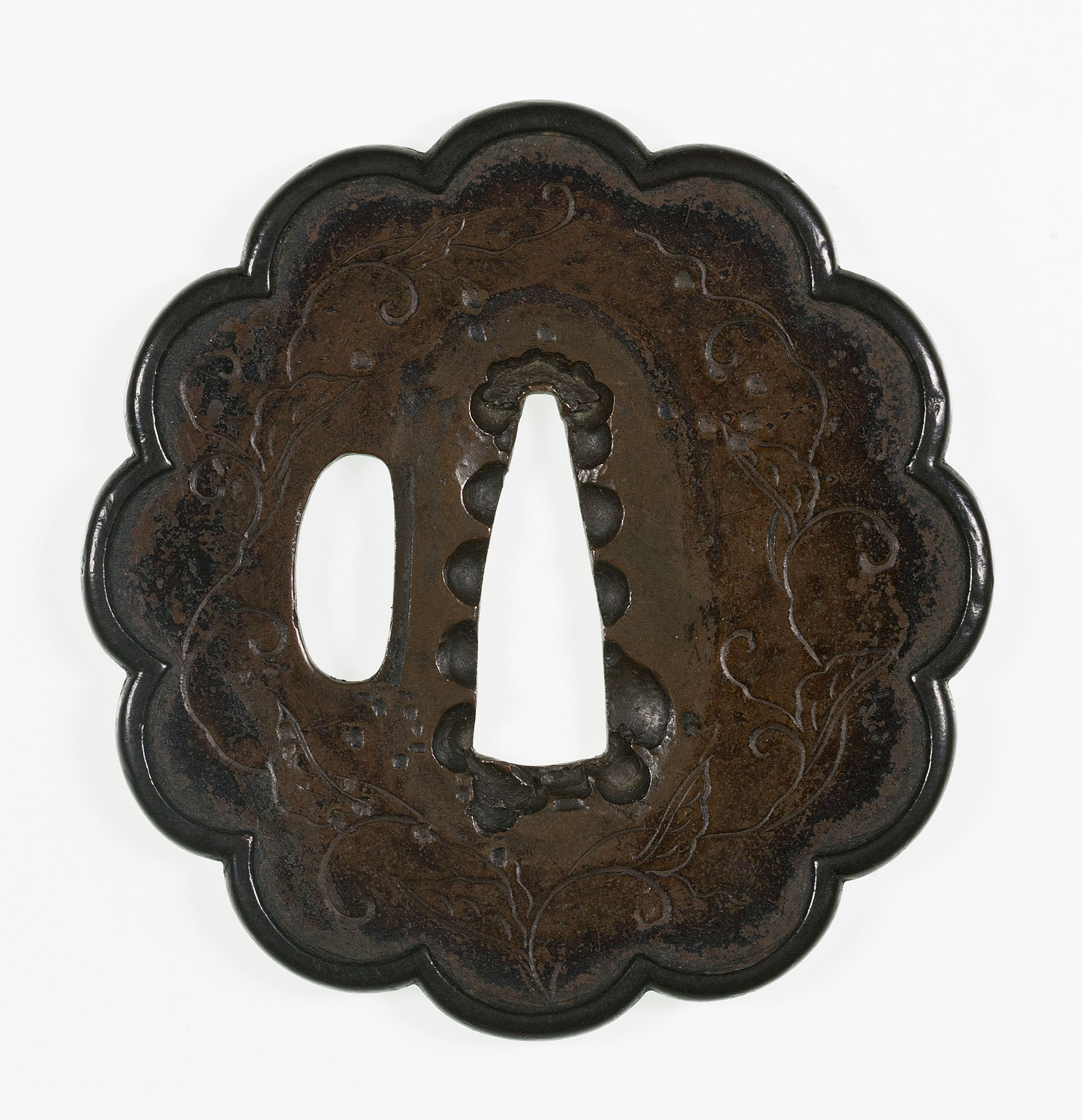
7.12 cm H x 0.50 cm T (don’t know how it got to the bottom of the pile so quickly)
I like coming across these early kinko guards that look like they may have been the inspiration for Hirata Hikozo’s work. The color of the alloy combined with the lacquer along with the fukurin and carving have much the same flavor although Hikozo refined them all and built on it.
I had always thought the tagane were also original to these pieces, but a friend pointed out that they may have been added as an upgrade toward Hikozo’s tagane mei. It’s certainly possible, but I also see them on guards around the same age that I think would really take some imagination to try to pass off as Higo. For example:
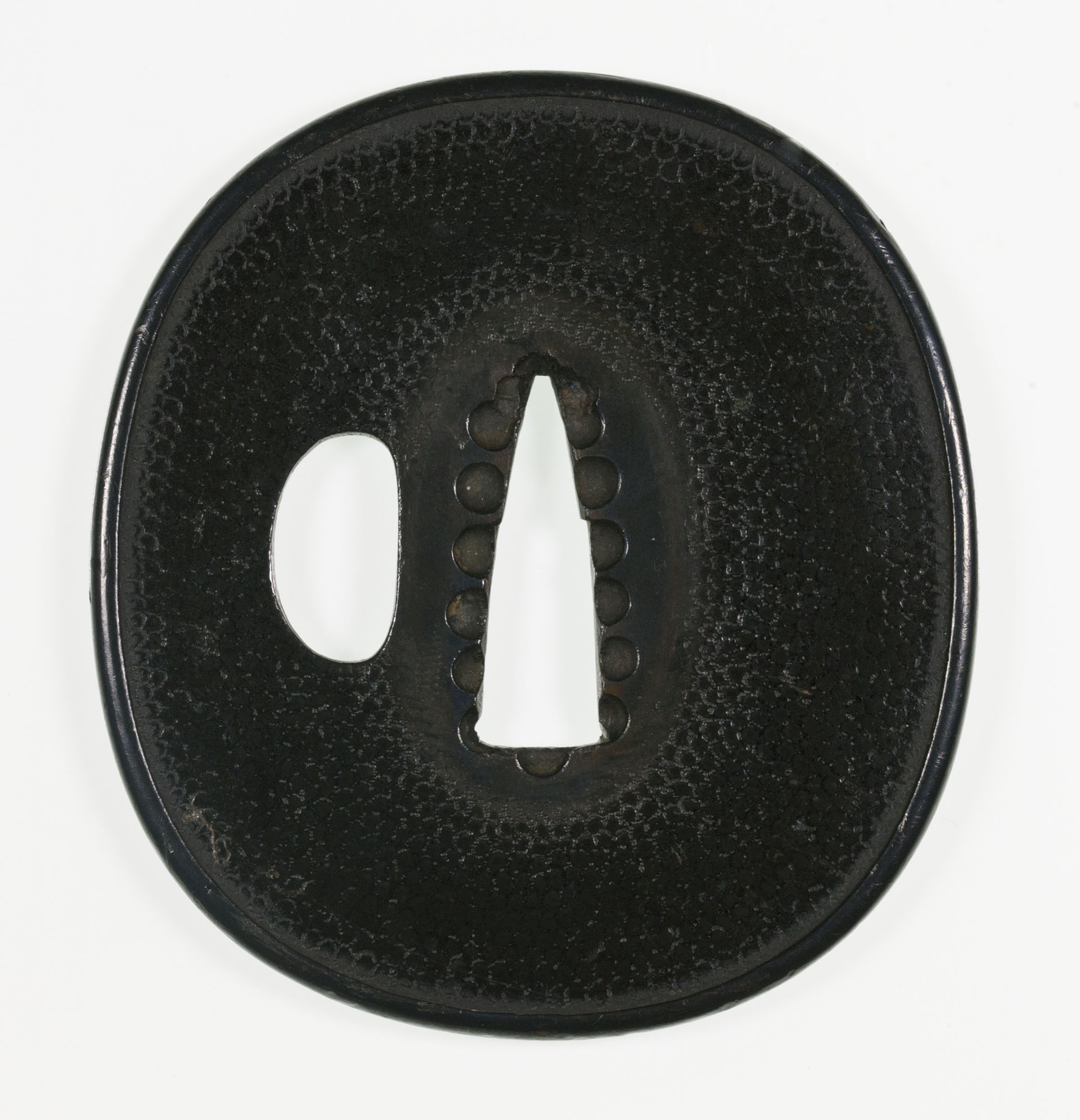
7.72 cm H x 4.2 mm T
They’re also seen on some iron Saotome tsuba, but the rest of the work is quite different, so probably no direct connection.
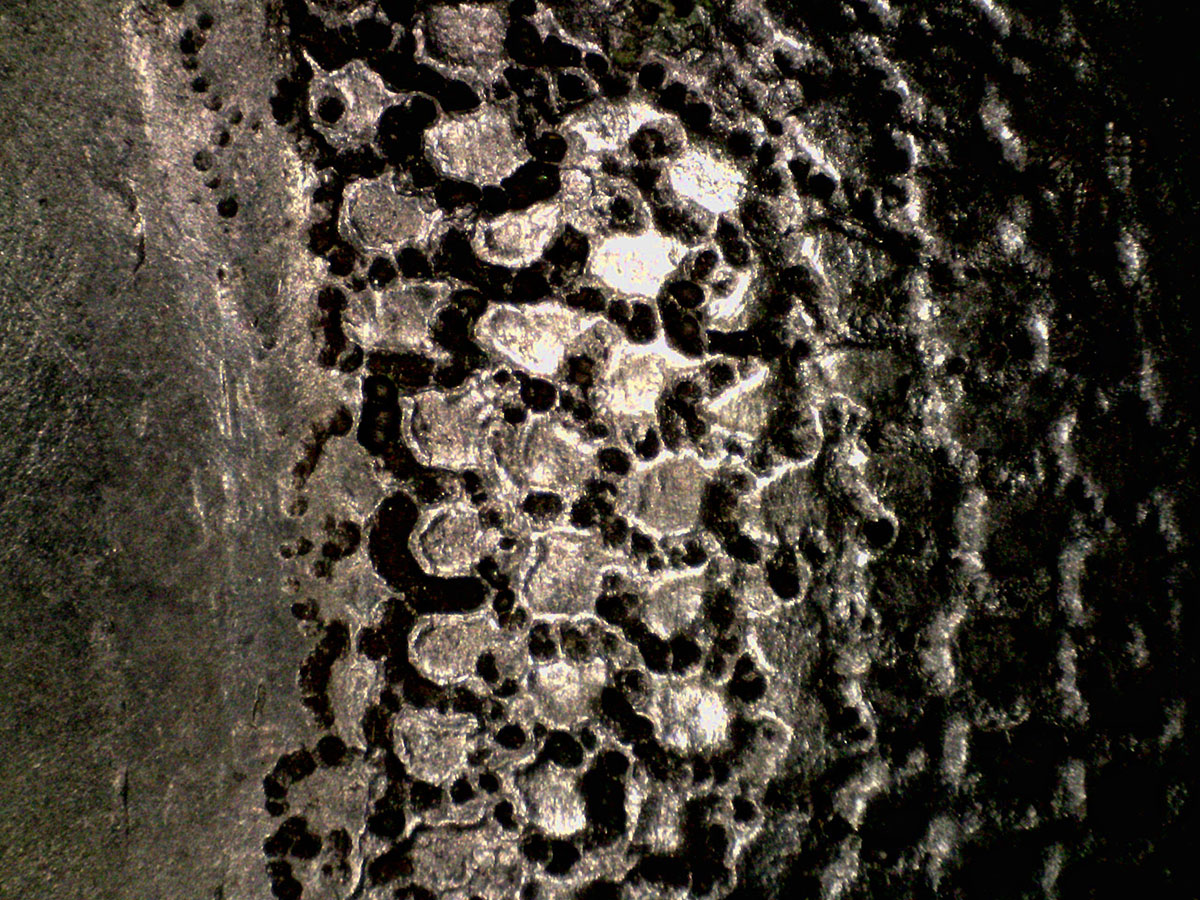
Setting Hikozo aside, note that the surface of this one is not covered with nanako or even worked with a ring-shaped punch. Each circle is made up of a series of tiny punch marks. I wonder if this was a country guy’s imitation of nanako or something original and maybe earlier.
Not nanako, but it had to have been a lot of work. Maybe the nanako punch was developed as a time saver.
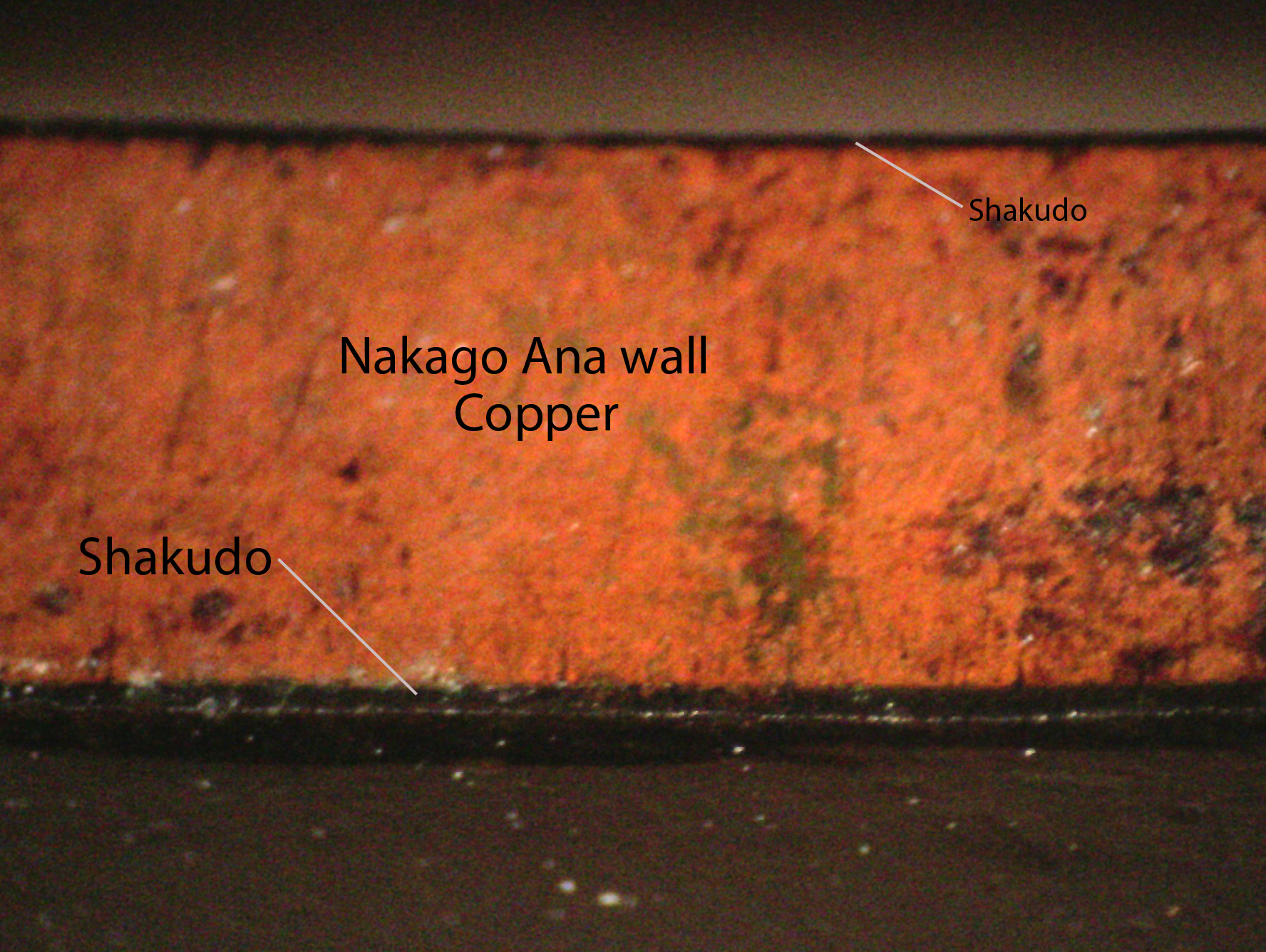
In this case the fukurin is needed to finish the three layer construction of the plate. Unlike the typical san mai guard, the shakudo here is only a thin foil. There is (of course) a specific term for this that I’ve forgotten. A microscope view inside the kozuka ana is here:
It appears to be quite a tight bond without signs of solder. I don’t know how it was done. Yes, I labeled the photo incorrectly way back when, it really is the inside of the kozuka ana.
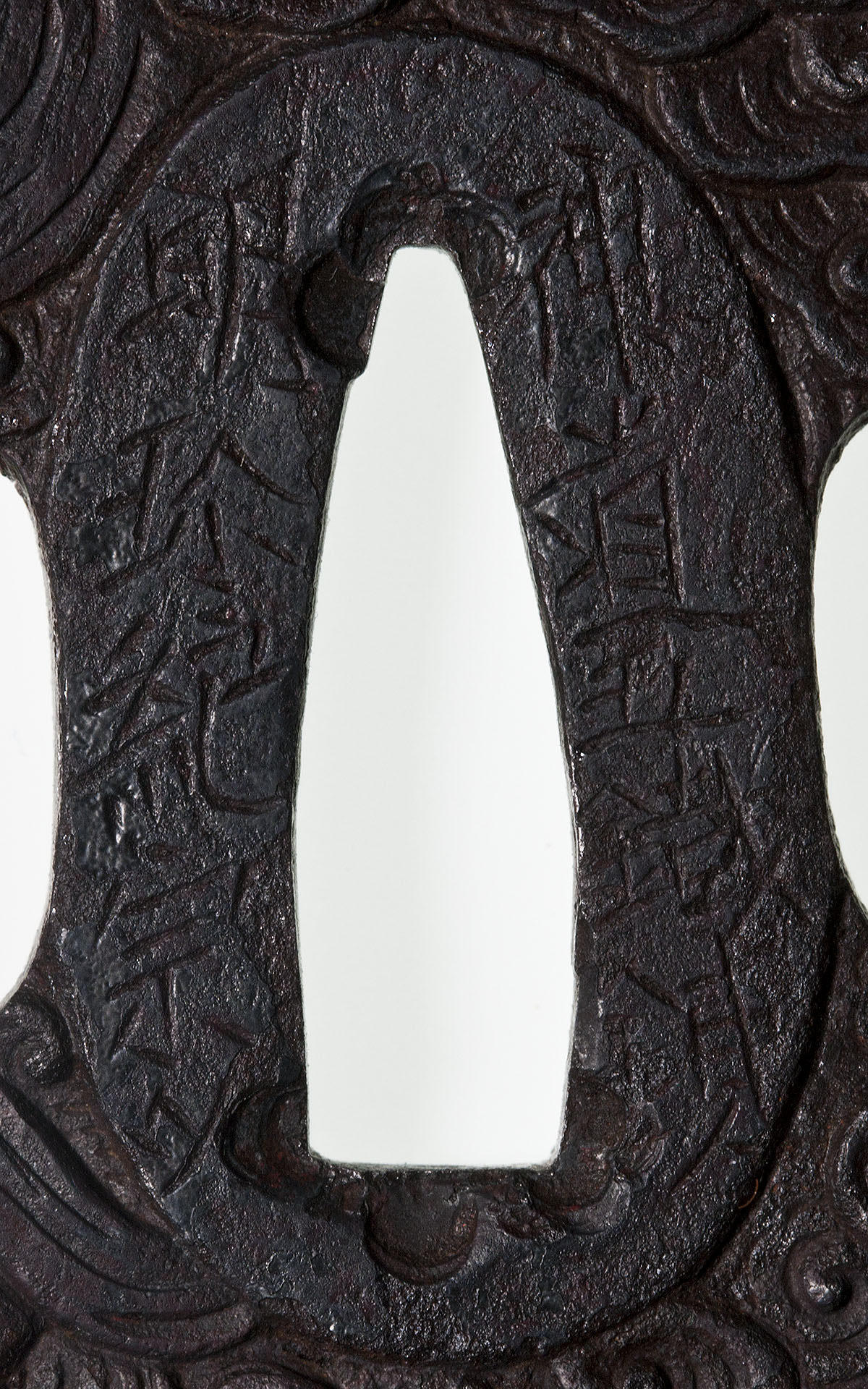
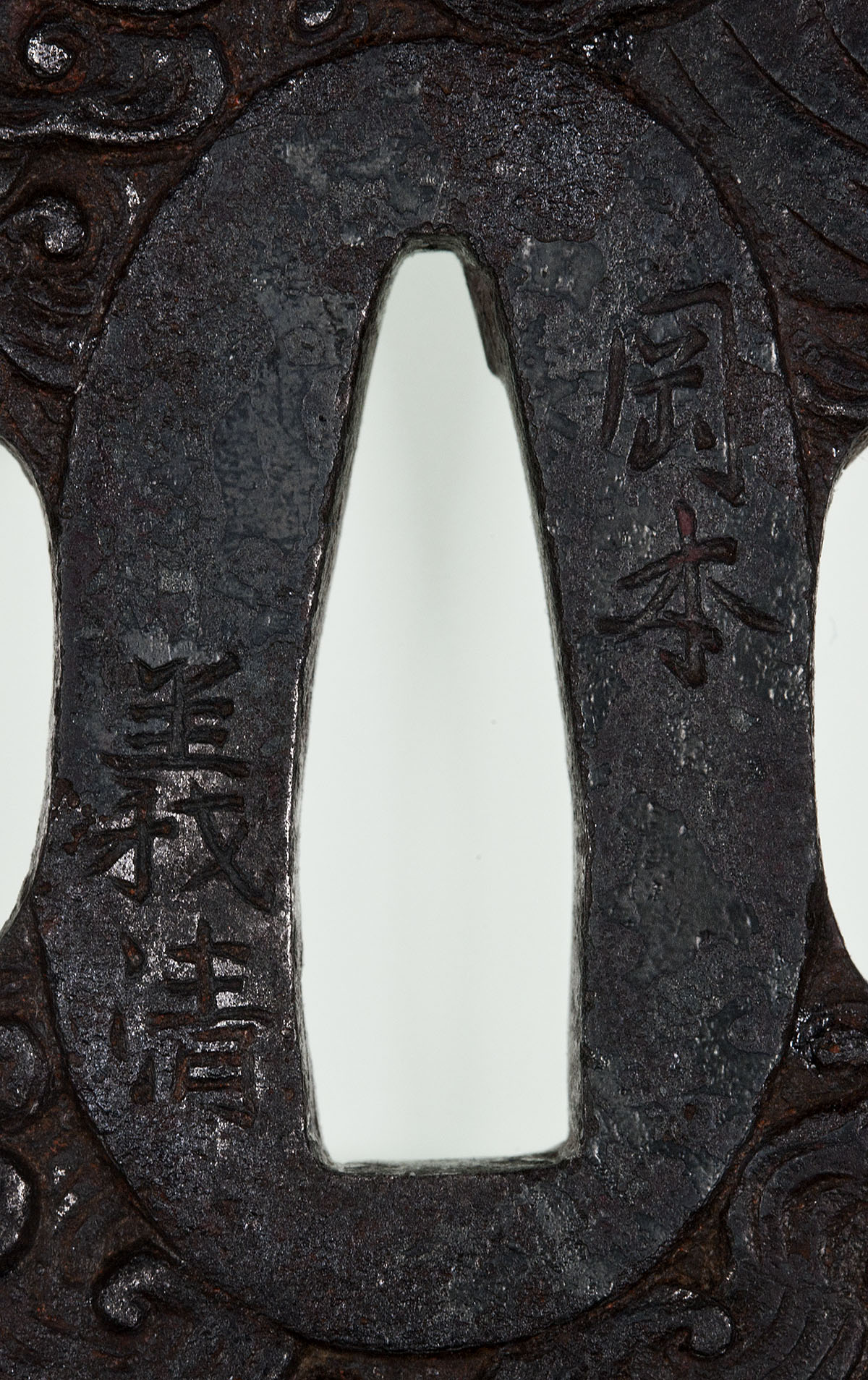
I recently came across this guard online. It was impossible to make everything out from the photos, but it looked like there were two different hands at work. After some rust removal we have the following.
The frontThe back
So, even without reading it, it’s pretty clear that two different people signed.
The easier one first, the back, says Okamoto on the right and Yoshikiyo on the left. Okamoto is a family name found among a number of groups, and very frequently in Choshu. I don’t see a Yoshikiyo with these kanji listed, but Haynes 11517 is a Yoshiharu with the same yoshi, the family name Okamaoto from Choshu, so perhaps a connection.
H 11742 is a Myochin Yoshikiyo with the same characters working in Hizen. Normally that would be a clearly different guy, but given the other side I wonder if there is some connection.
So, the front – the left side is Myochin ki Mune… something. It’s an odd character and partially punched into oblivion. Going through the various Myochin Mune possibilities we find that the last Munesuke signed with that distinctive “xx” shaped suke. He’s recorded in Haynes at 06239 and Bob has handwritten the variant kanji in the listing.
The right side looks like hard work, but it’s convenient to know that it’s something that a number of Myochin smiths added to their work. Haynes reads it shinto go tetsu neru – “forged from five layers of iron.”
A few days ago I was reading Markus Sesko’s blog and found an interesting article on just this phrase:
Markus reads it shinto go tetsu ren and suggests that rather than the standard interpretation the meaning may actually be “forged from an old begging bowl” of the type used by mendicant monks. Please read his post for the details and much more information. It’s very interesting.
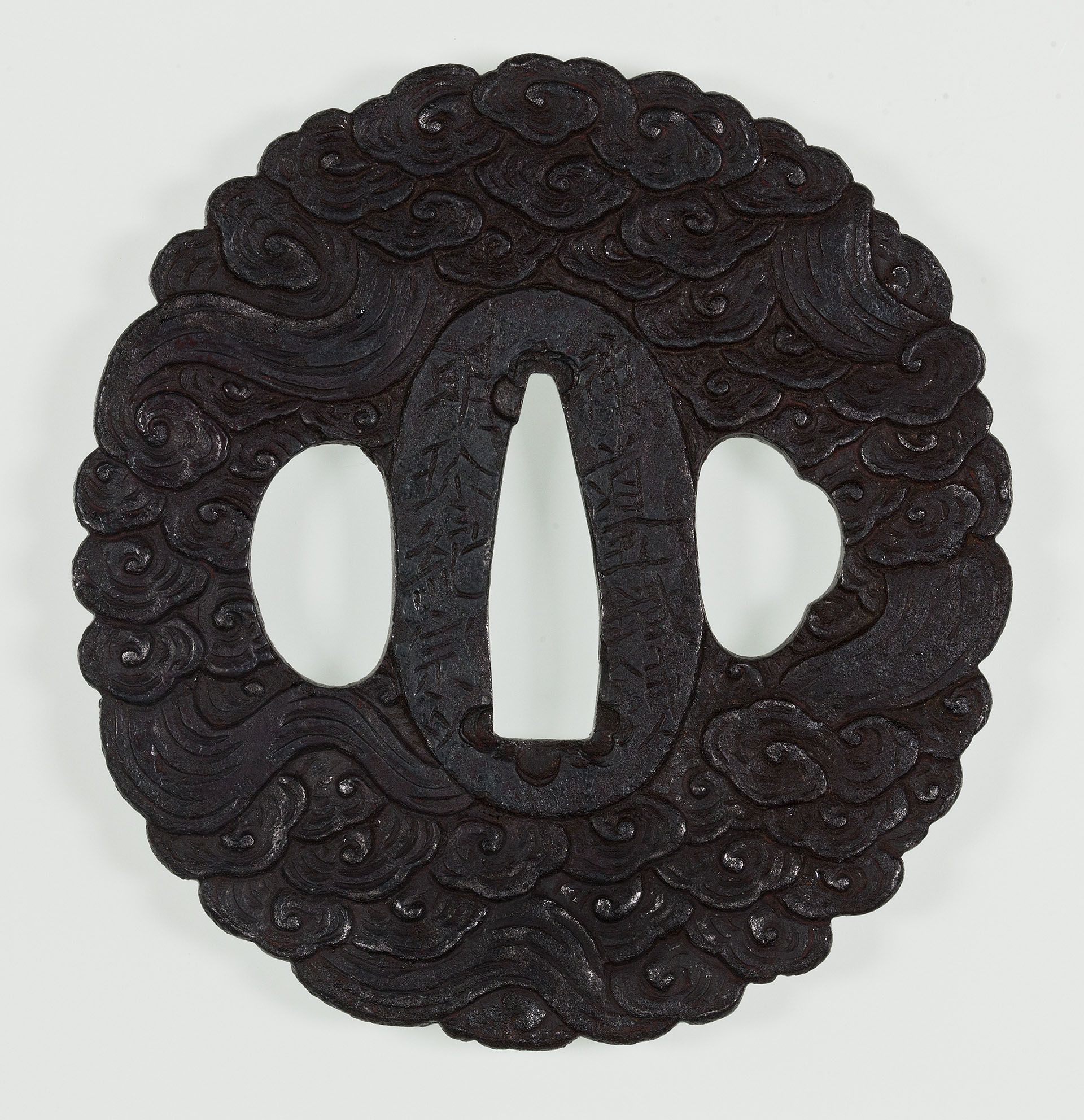
So, a view of the entire guard with its carving of clouds:
7.52 cm H x 0.57 cm T
The carving resembles Choshu work and given that Munesuke claims credit for forging the plate with either meaning intended, it seems likely that Yoshikiyo worked the chisels. His unlisted status may be because he wasn’t known for making tsuba on his own. Or maybe he is known as the Myochin Yoshikiyo and for some reason at this point was referencing where he came from.
I will have to ask some Choshu tsuba collectors if this apparent collaborative work is a well known thing. I don’t recall seeing it before, but this is outside my usual area and I may have some or all of it wrong.
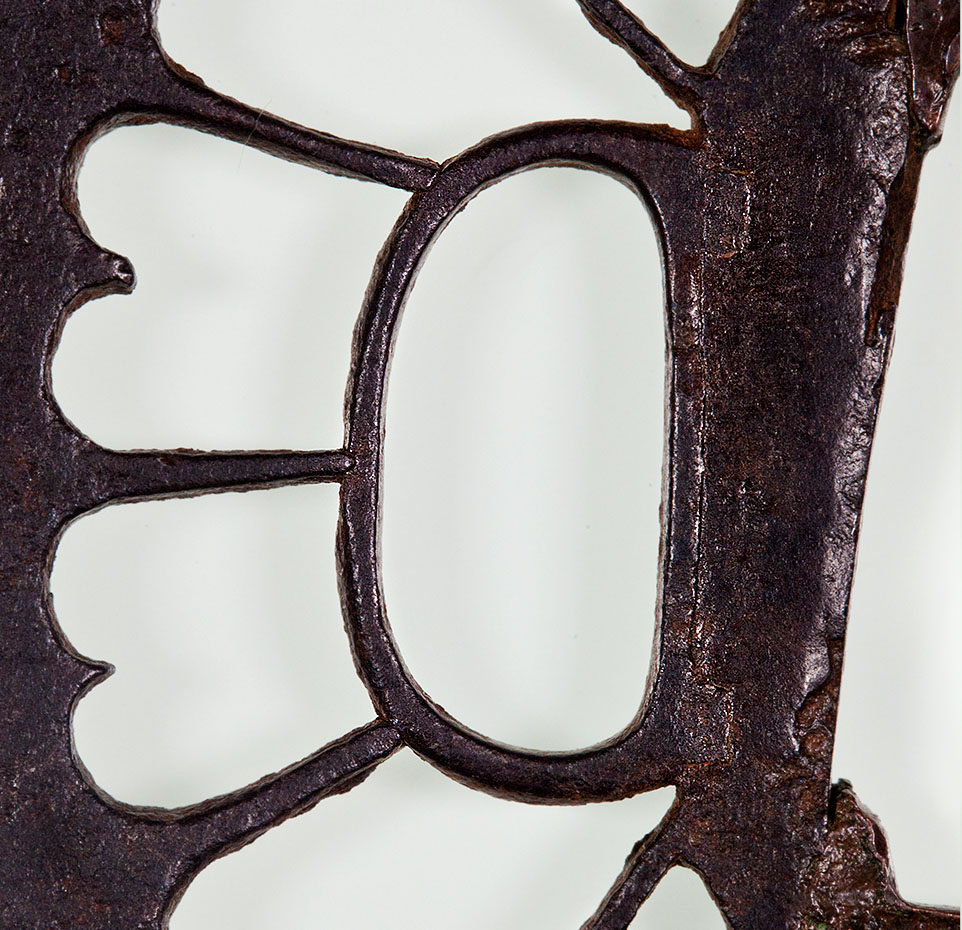
We’re used to seeing inlaid spokes on Sotome tsuba. Even more often we see kozuka ana cut into tsuba that did not originally have them. Occasionally when a new ana is cut into something like a nanban-style tsuba the rough opening will be finished off with a “inside” fukurin. In this case a craftsman not only cut the three spokes to make an opening, he created a new “ana” and dovetailed it into the seppa dai at top and bottom. The middle spoke uses the usual inlay method seen on Saotome kiku guards. The whole tsuba below:
7.37 cm H x 0.46 T
It’s an otherwise unexceptional example of the type. Since it has a “built in” kogai ana it seems likely that it originally had a similar kozuka ana. Either way someone chose to modify it rather than get a new one. Was the owner on a particularly tight budget or was there a personal attachment to the guard that meant that it could not replaced. Or, did it start off as an “off the rack” guard that didn’t quite fit what the buyer needed, but he was in a hurry and was promised that the alterations would be ready in the morning? After all, they knew how to inlay iron bits. As usual, unknown.
The Met’s Mito Tokugawa Goto collection mentioned in the earlier unboxing post lists its provenance as “Ex. coll.: Robert H. Rucker, New York.” So who was he? A quick check of my library and online searches turned up the following.
George Cameron Stone mentions him in his acknowledgements in A Glossary of the Construction, Decoration and Use of Arms and Armor: in All Countries and in All Times saying “Mr. Robert H. Rucker who has placed his unequaled knowledge of things Japanese at my disposal and who has given me valuable suggestions and most helpful criticism.”
In his introduction to the 1999 Dover edition of Stone, the Met’s Donald LaRocca mentions “Robert H. Rucker (d. 1944), a noted collector of Japanese arms.”
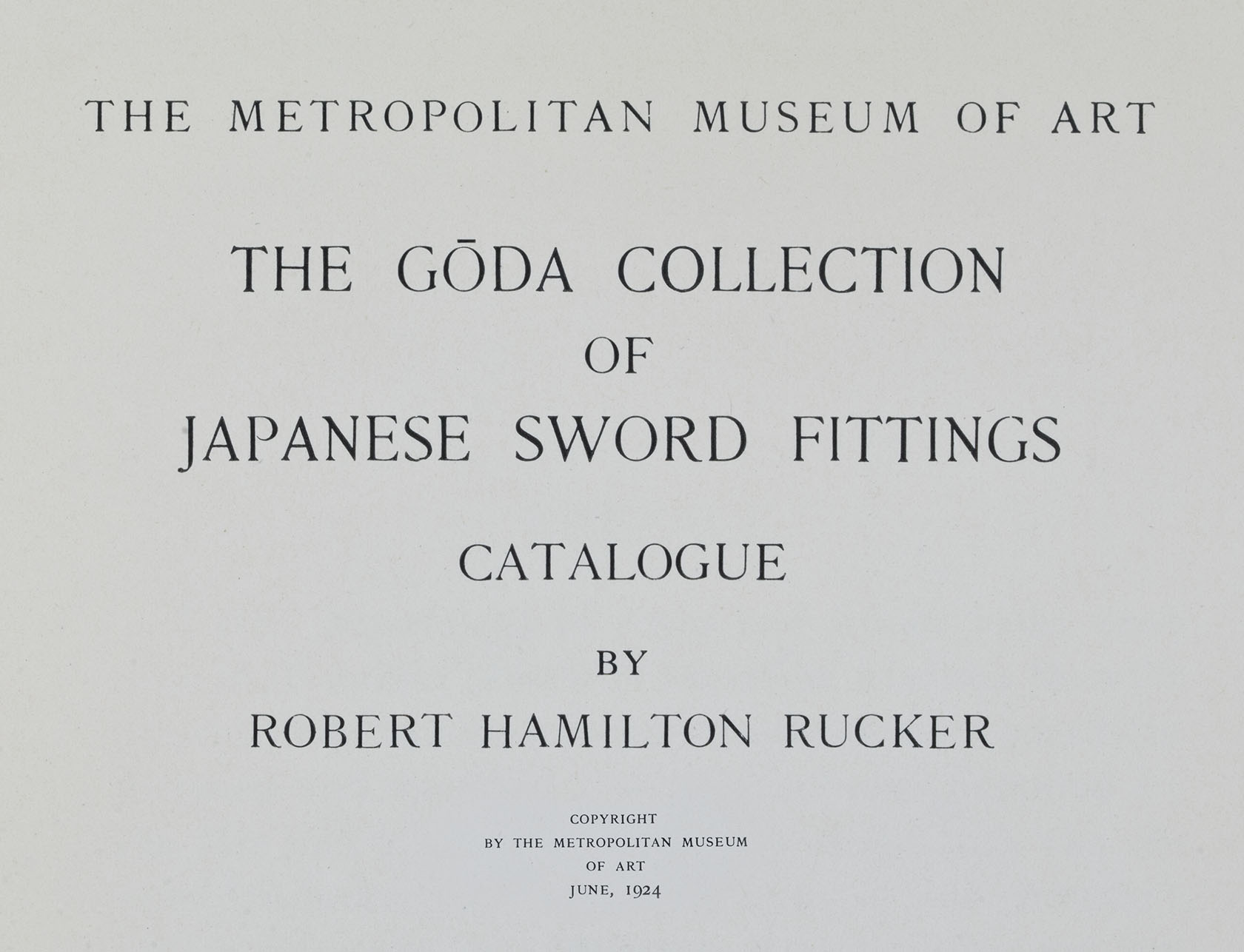
While not mentioned often today, Rucker’s 1924 catalog of the Goda Collection shown above takes a deep dive for the time into terminology, materials, methods and a survey of schools. In his introduction to that book Bashford Dean calls Rucker “a learned and judicious amateur in this field.”
The Annual Report of the Trustees of the Metropolitan Museum says “There is now in press a catalogue of our Japanese sword furniture (Goda Collection, 1917), the manuscript of which was prepared by Robert Hamilton Rucker and embodies his researches of the past decade.”
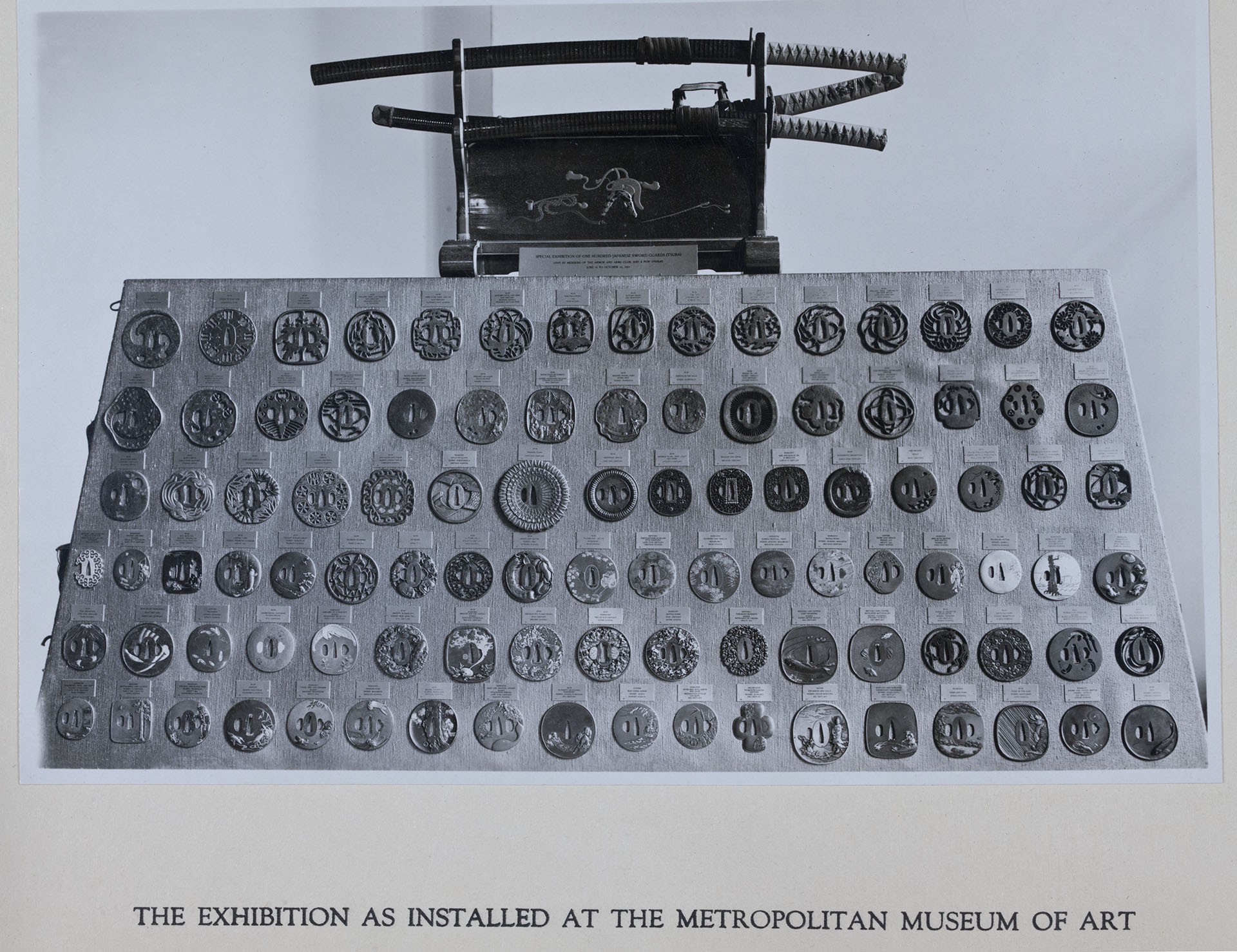
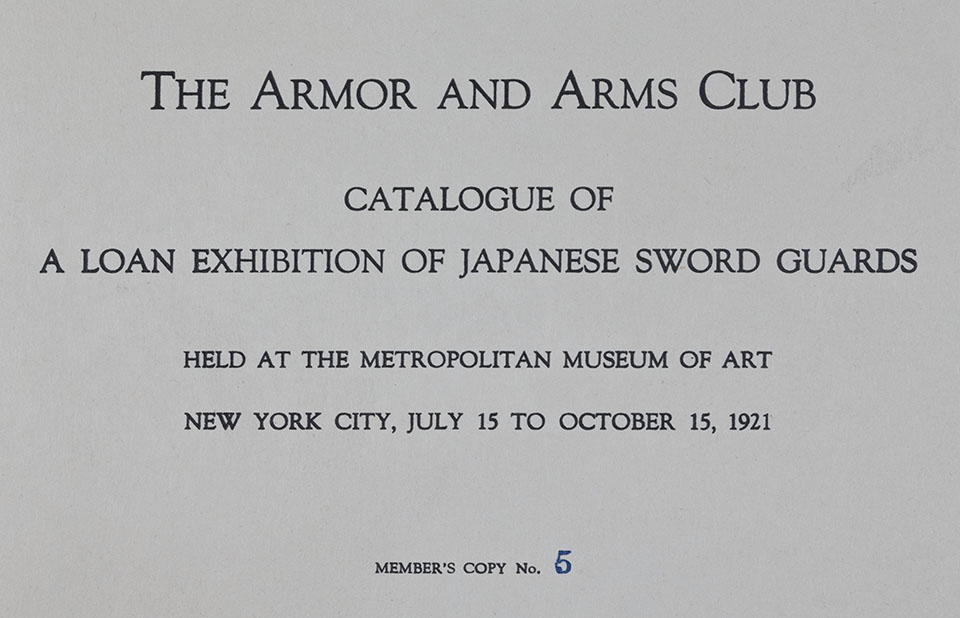
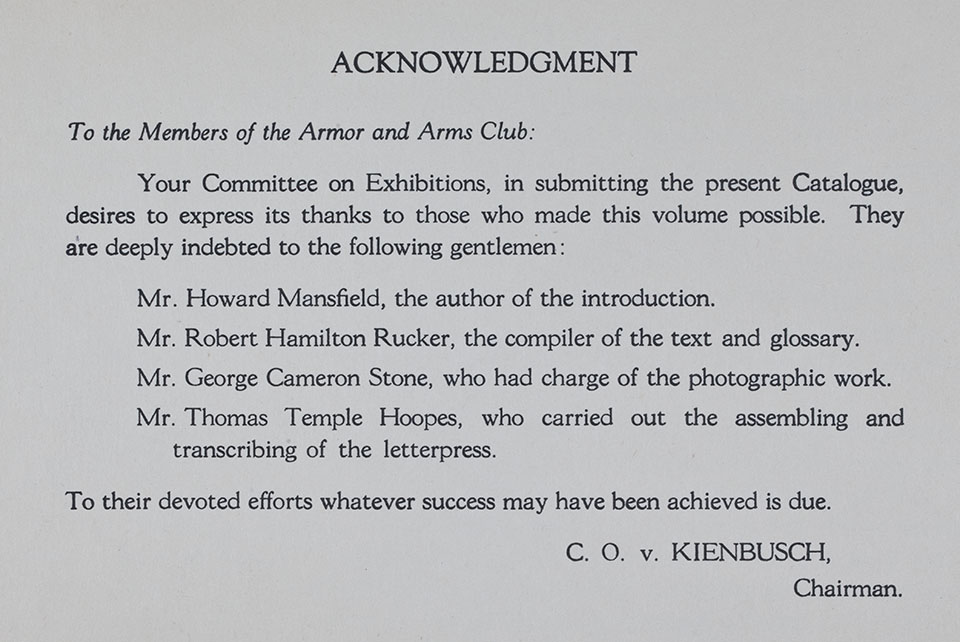
An even less well known book with contributions by Rucker is the exhibition catalog shown above. Each guard is illustrated and described, and while the paper has not held up well, the images are actual photographic prints that are tipped in and are in perfect condition with excellent resolution. I will probably post some later (update – one added below).
According to Financier, New York, Vol 108 , (Sept 9, 1916) and The Commercial and Financial Chronicle, vol 103 “Mr. Rucker is a certified public accountant at 27 Pine Street, New York City.”
Club Women of New York, Vol 6, Parts 1910 – 1911 Lists Robert Hamilton Rucker, 119 East 19th St. as treasurer of the National Arts Club, Gramercy Park, Manhattan.
Asia and the Americans, Volume 21, part 1 reports that “Robert Hamilton Rucker has traveled extensively in the Orient for the purpose of studying eastern art and religions.”
Dean’s “learned and judicious amateur” assessment seems spot on and intended in the most positive sense of the term.
What I have not found yet is anything that suggests when and where Rucker might have acquired his collection of Goto fittings. The accession date to the museum is 1945, and LaRocca records his date of death as 1944. Given the published dates of his professional activities early in the century he would presumably not have been a young man during the second world war. Daimyo families were sometimes inclined by necessity to part with family treasures in the early decades of the last century and that may be the case here. I will update as any additional information comes to light.
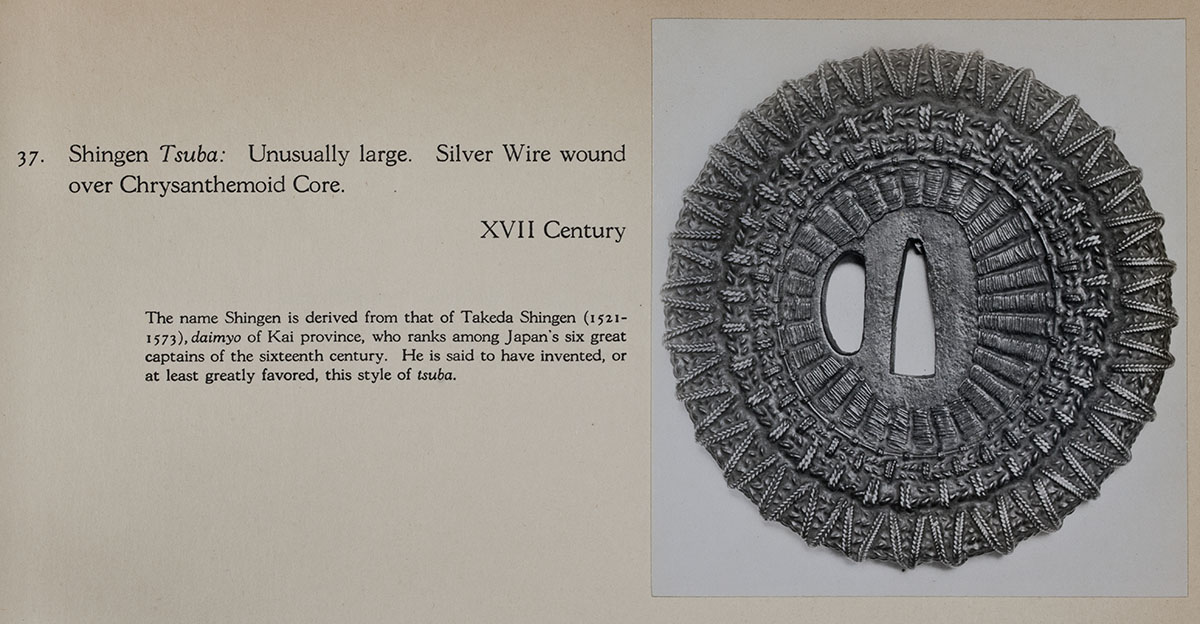
Update – a request for the closeup view of the giant Shingen tsuba toward the middle of the display board:
Half of a page from the NY Armor and Arms club exhibition catalog
Update – Thanks to Pete K. for mentioning that Rucker worked with Alexander Mosle on his collection catalogs. Pete once had a copy of the 1909 Berlin catalog with extensive handwritten annotations by Rucker.
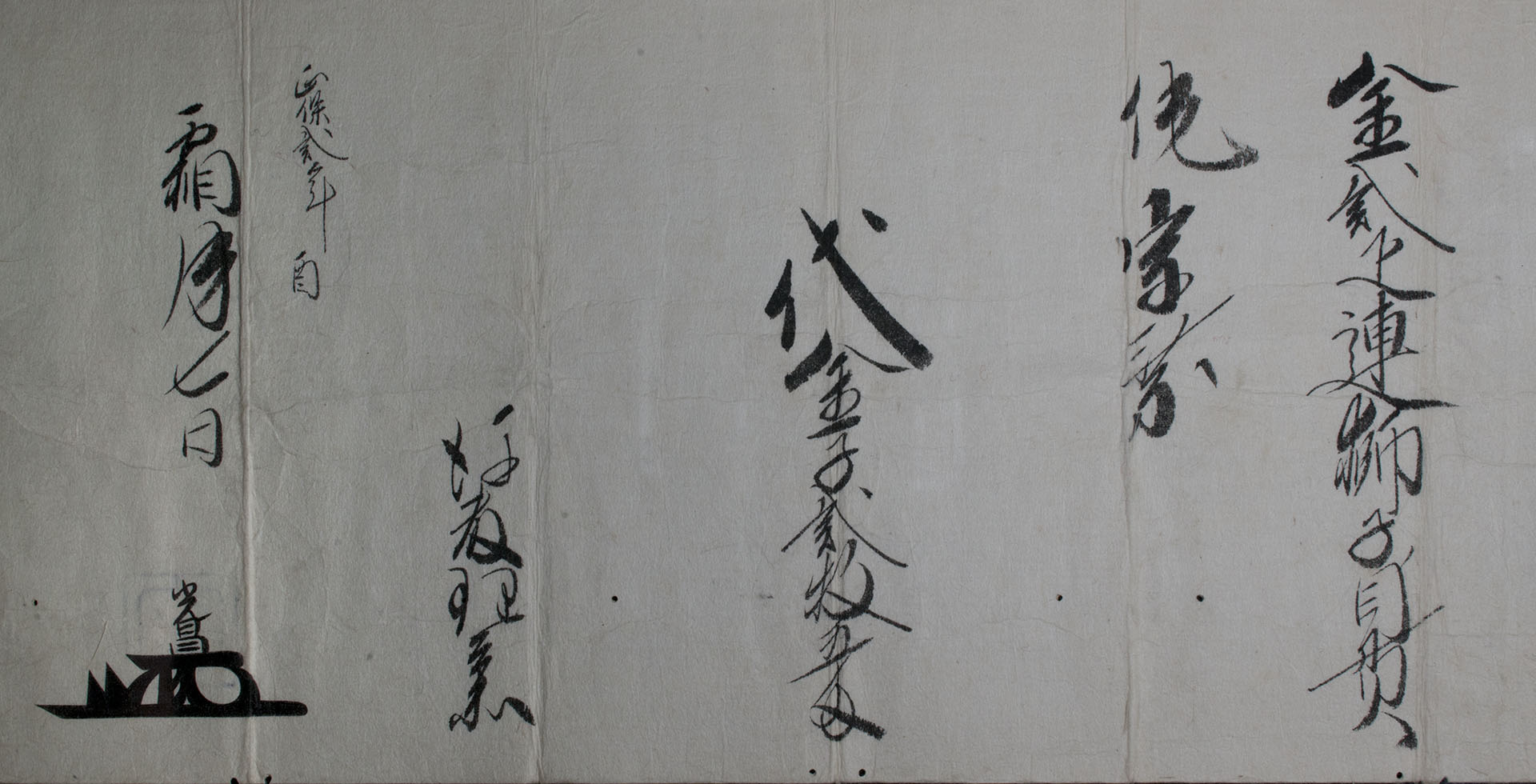
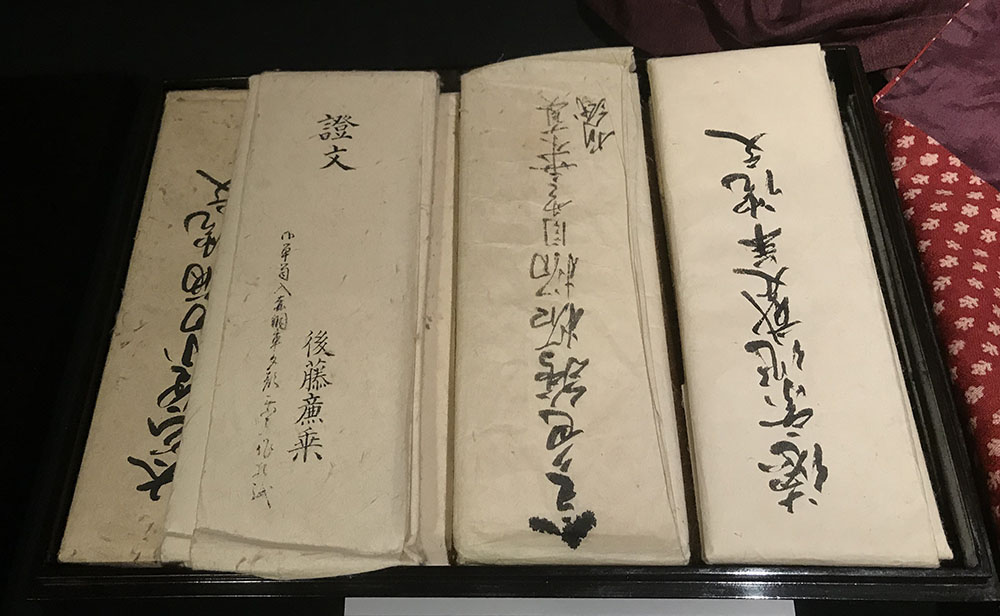
Here is an example of a paper by Mitsumasa (Goto Teijo, the 9th) attributing gold double shishi menuki to Goto Sojo (the 2nd). Not from the Met collection, but the sort of thing to be found inside those wrappers in the unboxing post below…
Thanks to Markus Sesko, the Metropolitan Museum of Art and The New York Token Kai, a group of fifty or so sword students were invited to a lecture and viewing at the museum on the swords of Echizen Yasutsugu and the Shimosaka school.
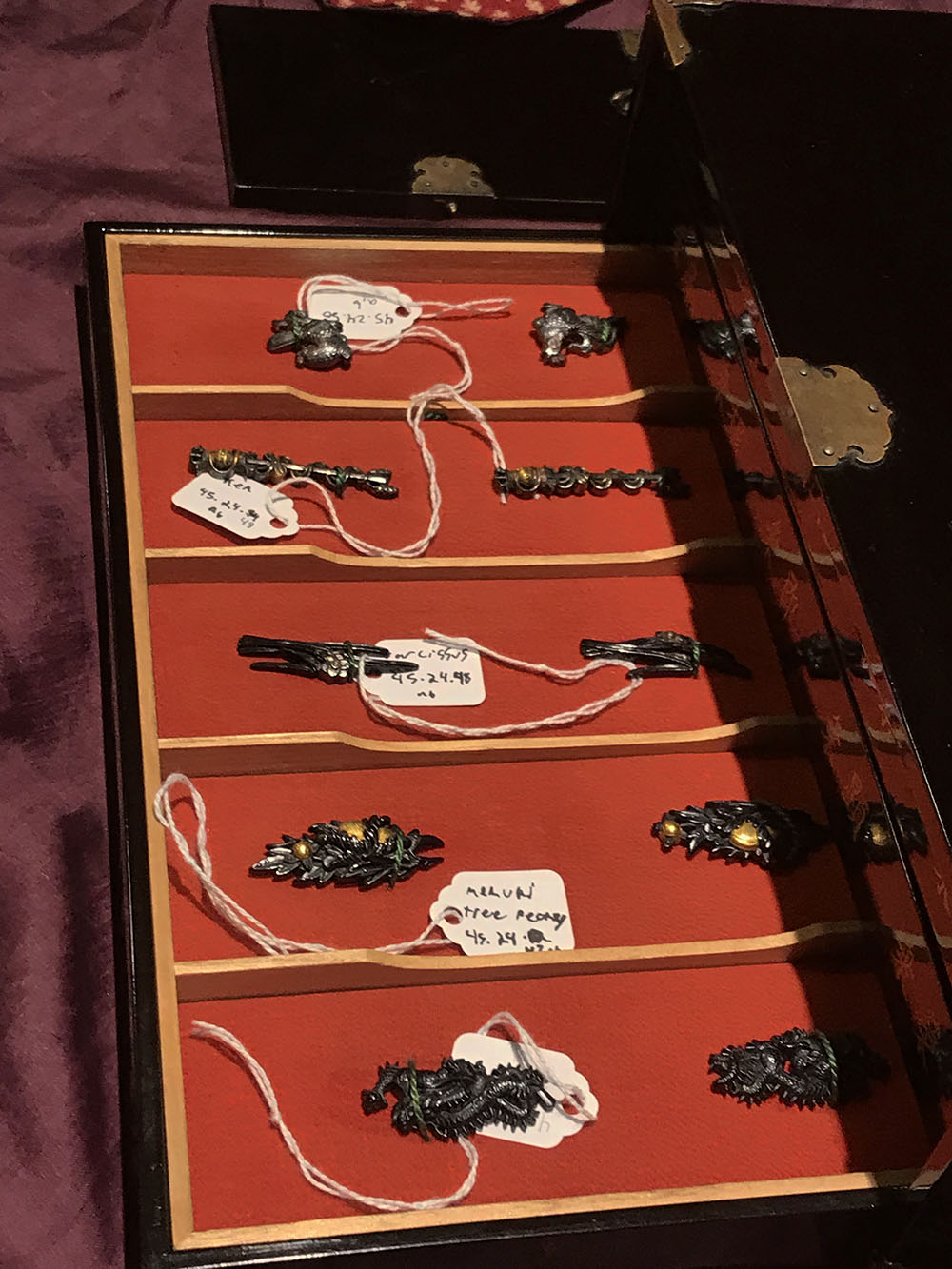
Visitors to the Japanese arms gallery at the Met will be familiar with the Mito Tokugawa collection of Goto kodogu on permanent display. There are mitokoromono from each of the first 15 mainline generations along with additional kozuka and menuki. (Ex. coll. Robert H. Rucker, NY, Rogers Fund, 1945).
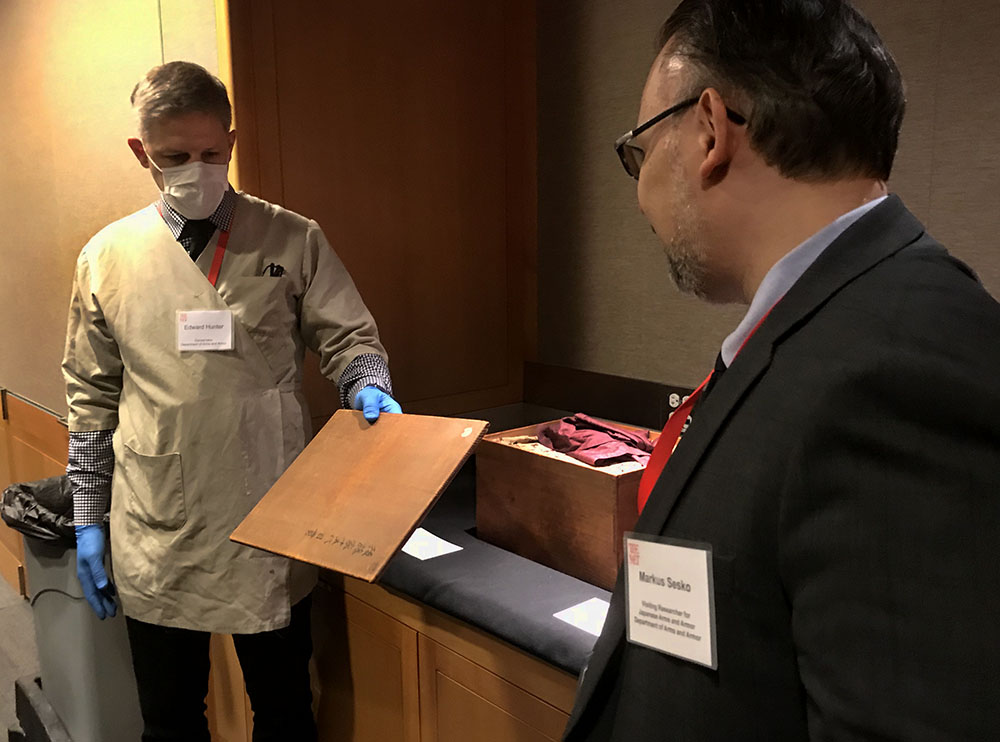
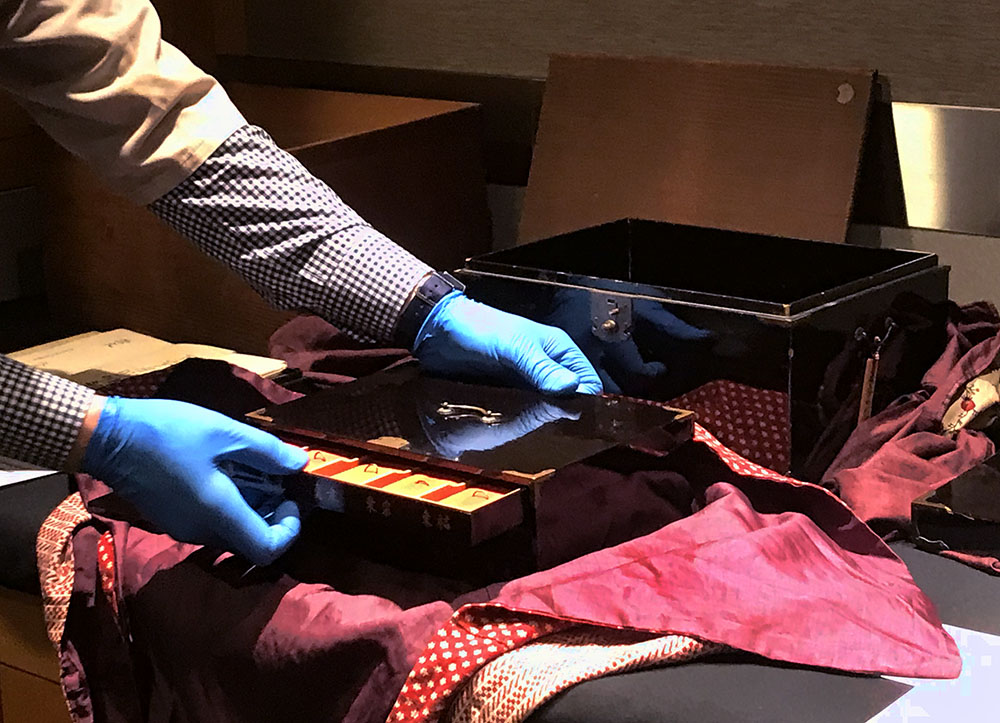
Seldom (never?) seen on display are the lacquer boxes that originally housed the collection. Markus retrieved these from deep storage and brought them out for study along with the above mentioned swords.
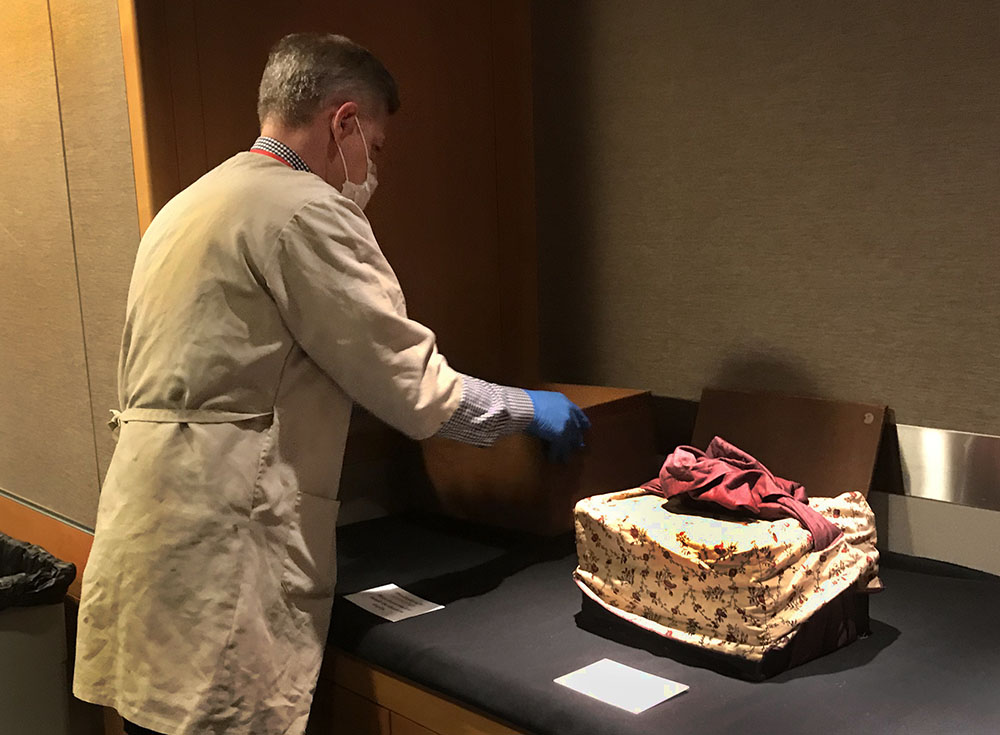
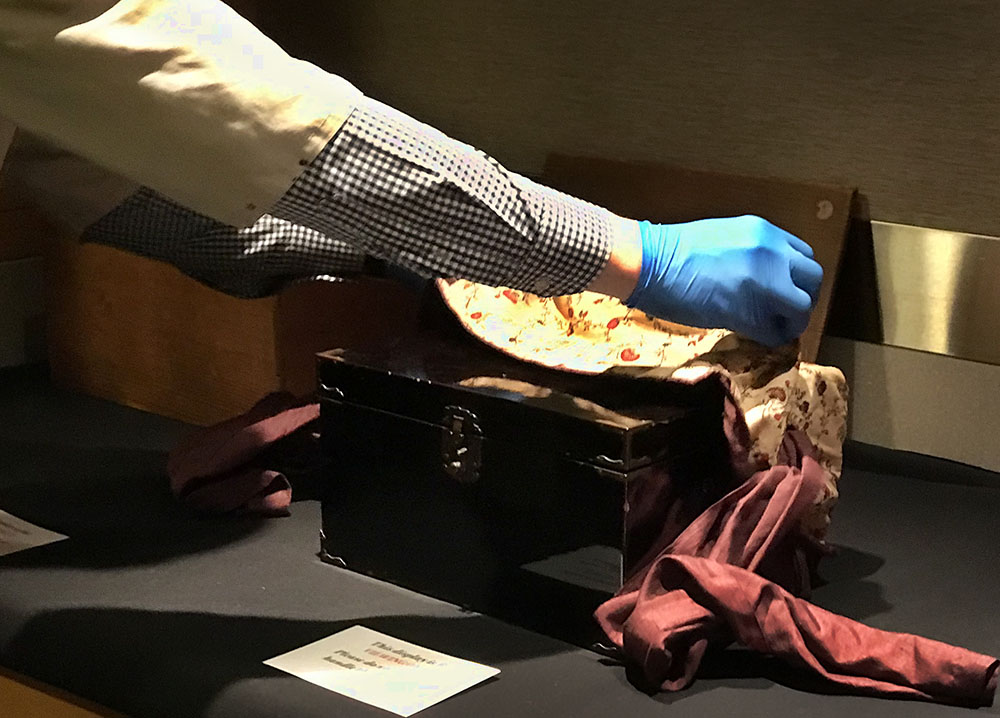
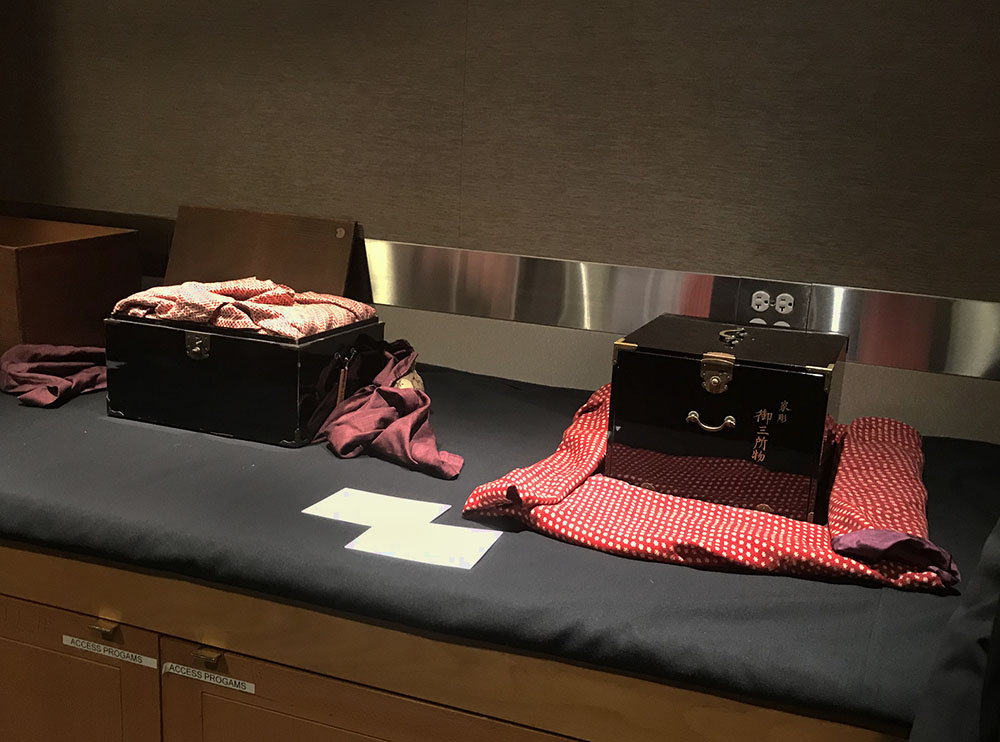
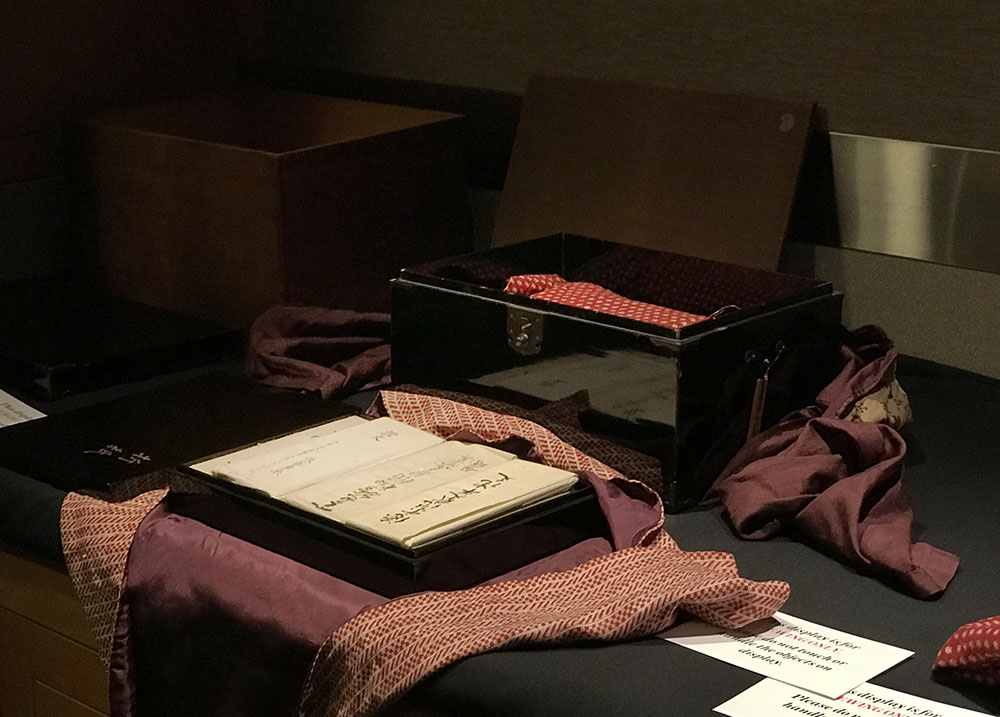
Markus looks on as Edward Hunter removes the lid of the outer storage boxSetting aside the outer storage box. The lacquer inner box is wrapped in furoshiki.Unwrapping the box holding the menuki collectionThe inner box lid removed. The box for the mitokoromono collection is on the right.The top tray holding the Goto origami is removed and unwrapped.The set of drawers is removed and one opened. The name of each generation is written in lacquer.Menuki from the last five generations remaining in storage inside the box.The wrappers containing the origami
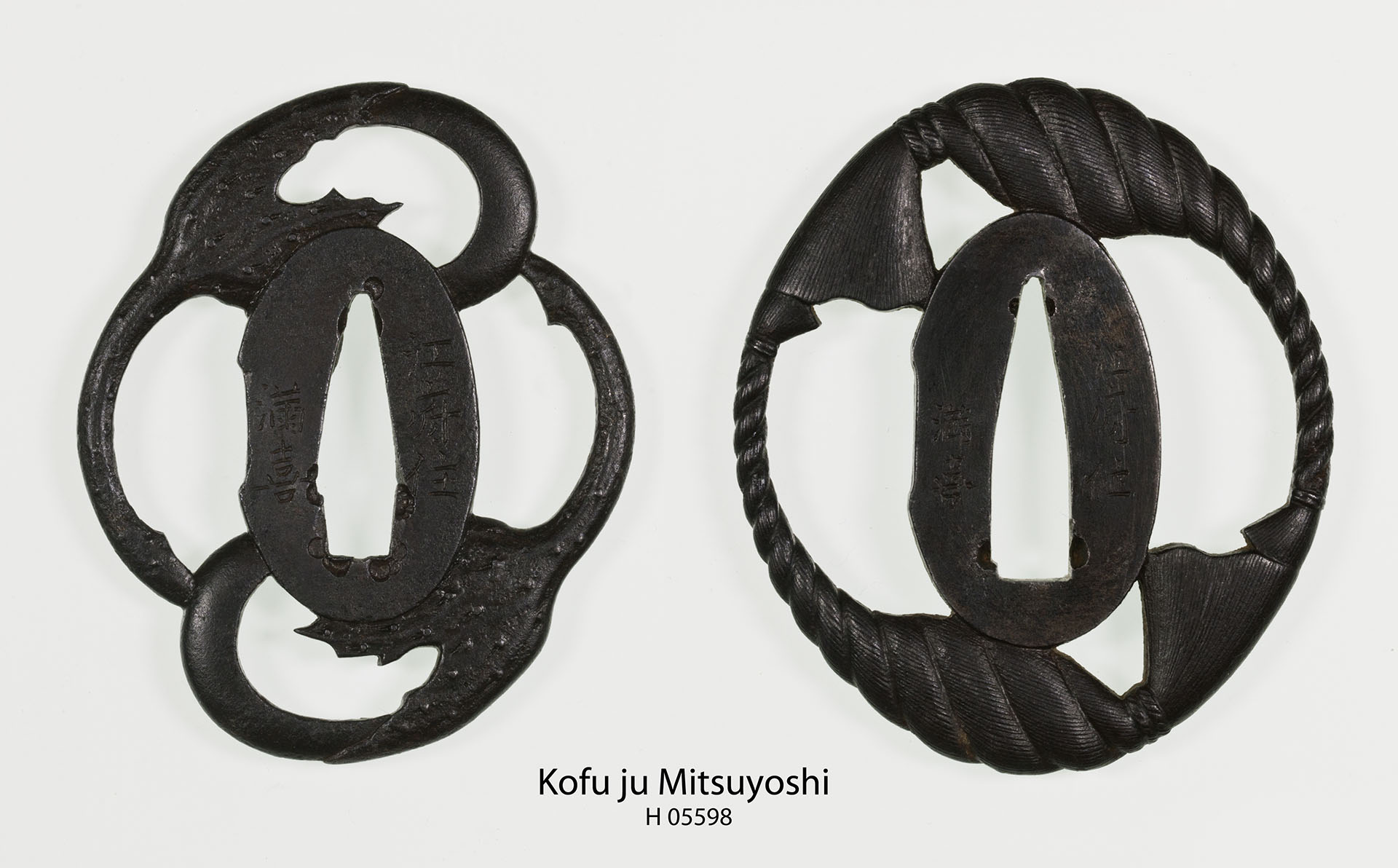
6.5 cm H x 0.4 cm T, eggplants / 6.6 cm H x 0.5 cm T, Shinto straw rope
I found the nasu motif tsuba first and was attracted to the modern feel in the sukashi depiction of the eggplants and the texture of the carving. Showing two rather than the typical three nasu is unusual as is the small size.
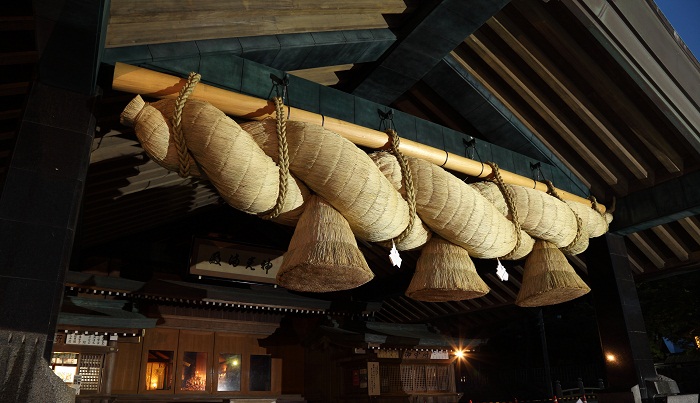
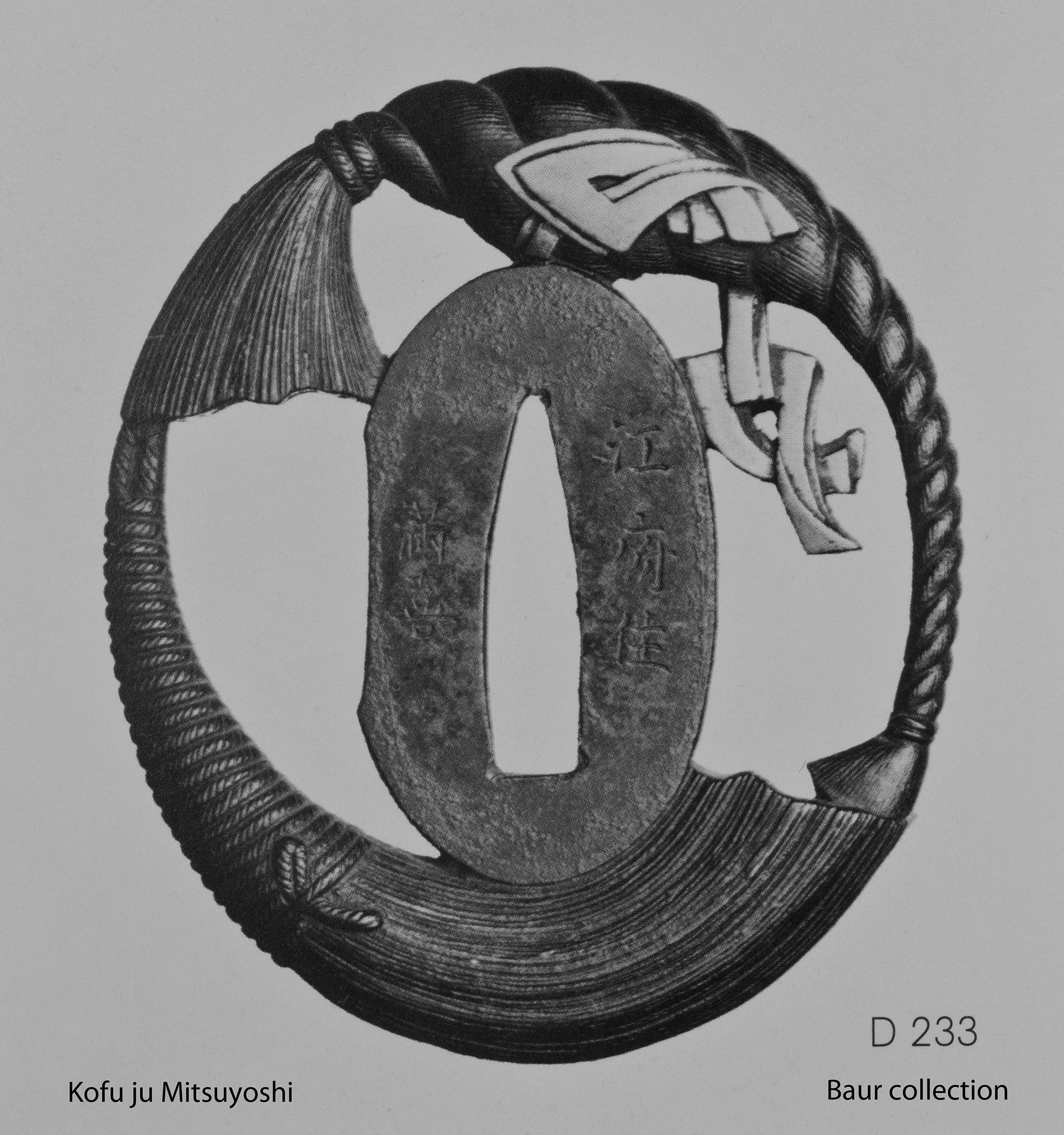
Later I ran across the shimenawa motif guard and before seeing the signature noticed that it used the same design approach as the nasu guard. Single straw ropes like these are used with household shrines, or they are combined in massive temple ropes like this.
I don’t recall coming across that motif on a tsuba before. Mitsuyoshi was an interesting designer.
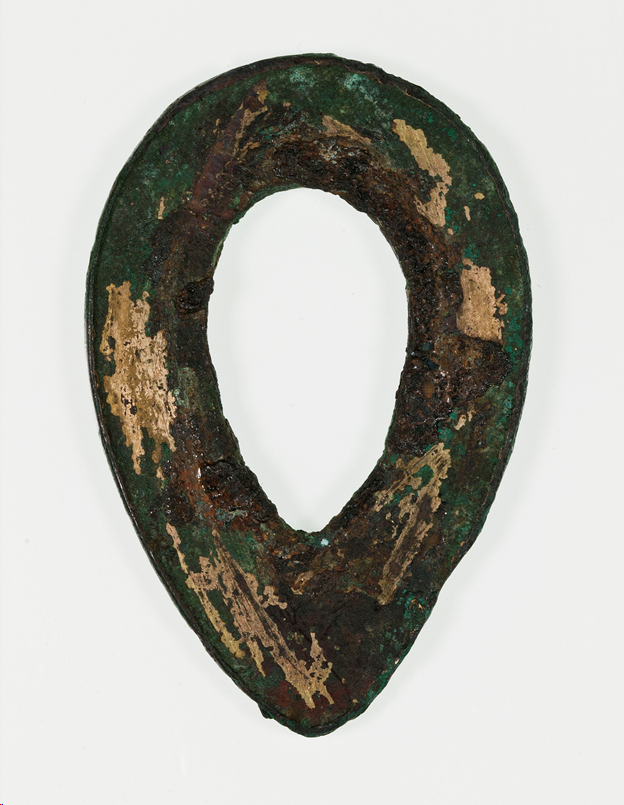
It looks like the first examples were introduced in 1551 and wider domestic production started around 1620. I have to wonder how long it took for the first daimyo to own a pair to think about what his preferred kodogu maker might be able to do with the new technology.
 Tsuba Kansho